Healthy eyesight plays an important role in nearly every aspect of daily life, from reading and driving to working and enjoying time with family. However, many eye conditions develop gradually without noticeable symptoms. Regular comprehensive eye exams help identify changes in vision, detect early signs of eye disease, and support long-term ocular health.
At Tran Vision Center in Laredo, TX, comprehensive eye examinations provide patients with an opportunity to evaluate their visual clarity and overall eye health. Whether you wear prescription glasses, use contact lenses, or have never experienced vision problems, routine eye care is an essential component of preventive healthcare.
What Is a Comprehensive Eye Exam?
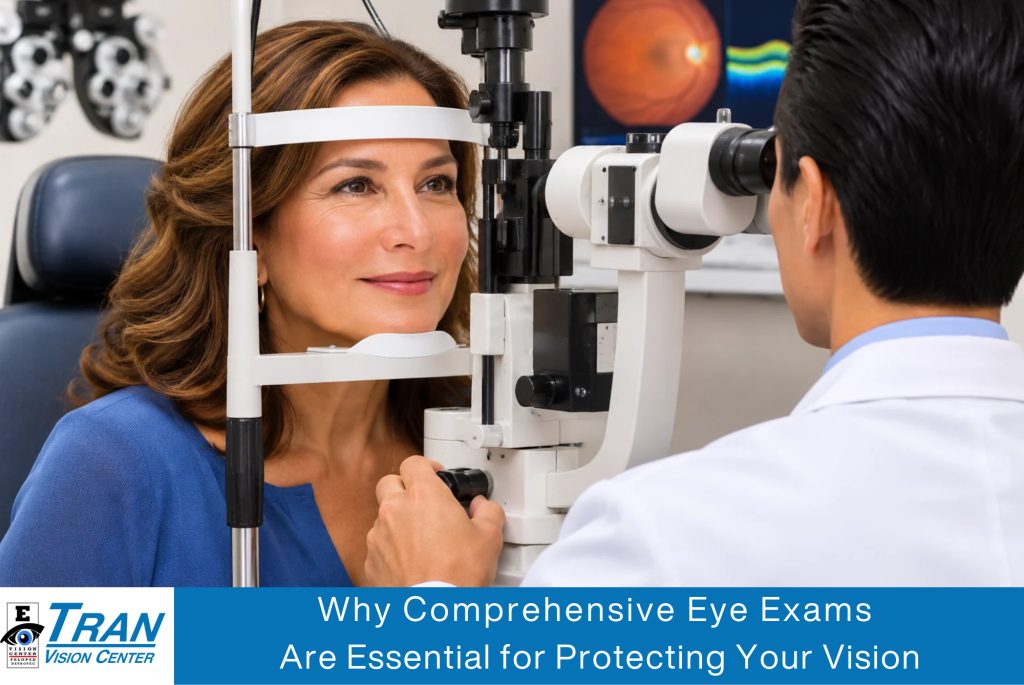
A comprehensive eye examination evaluates more than your ability to read letters on a vision chart. It assesses how well your eyes focus, work together, and respond to light while examining important structures of the eye.
Unlike a basic vision screening, which primarily identifies potential visual difficulties, a comprehensive eye exam can detect signs of ocular diseases and other health concerns.
According to the National Eye Institute (NEI), dilated eye examinations are important for identifying conditions that can threaten vision before noticeable symptoms develop.
Visual Acuity Testing
Visual acuity testing measures how clearly you see objects at various distances. This assessment helps identify common refractive errors, including:
- Nearsightedness (myopia)
- Farsightedness (hyperopia)
- Astigmatism
- Presbyopia, an age-related reduction in near focusing ability
These conditions often cause blurred vision, eye strain, headaches, or difficulty reading.
Refraction Assessment
A refraction determines the lens prescription needed to improve visual clarity. During this examination, different lenses are compared to identify the correction that provides the clearest, most comfortable vision.
Patients requiring vision correction can explore prescription eyeglasses or contact lenses based on their individual needs.
Eye Health Evaluation
An eye health assessment examines structures such as the cornea, iris, lens, retina, and optic nerve.
Depending on clinical findings, testing may include:
- Intraocular pressure measurement
- Slit-lamp examination
- Retinal evaluation
- Eye movement and alignment testing
- Pupil response assessment
- Dilated examination when indicated
These assessments help identify abnormalities requiring monitoring, treatment, or referral.
Eye Conditions That Comprehensive Exams Can Detect
Glaucoma
Glaucoma describes a group of diseases that damage the optic nerve. Many forms progress without early symptoms, making routine examinations especially important.
Untreated glaucoma can lead to permanent vision loss.
Cataracts
Cataracts occur when the eye’s natural lens becomes cloudy, resulting in blurred vision, glare sensitivity, and difficulty seeing at night.
Early identification helps patients understand their condition and determine when additional evaluation or treatment is appropriate.
Age-Related Macular Degeneration
Age-related macular degeneration affects the macula, the central portion of the retina responsible for detailed vision.
Early detection allows for appropriate monitoring and, in certain cases, treatment that can help reduce the risk of further vision loss.
Diabetic Retinopathy
Diabetes can damage small blood vessels in the retina, sometimes before visual symptoms appear.
The American Diabetes Association emphasizes the importance of regular retinal examinations for individuals living with diabetes.
How Often Should You Have an Eye Exam?
The appropriate examination schedule depends on age, medical history, symptoms, risk factors, and existing eye conditions.
Healthy adults with no significant risk factors may require examinations less frequently than patients with diabetes, glaucoma risk, or progressive visual changes. Adults aged 65 and older generally benefit from examinations every one to two years, with more frequent care when indicated.
Contact lens wearers also require periodic evaluations to assess lens fit and corneal health.
Your eye care provider can recommend an individualized schedule.
Warning Signs That You Should Schedule an Eye Exam
Certain symptoms suggest that an eye examination should not be delayed:
- Frequent headaches associated with visual tasks
- Blurry vision at near or far distances
- Difficulty driving at night
- Persistent eye strain
- Double vision
- Increasing sensitivity to glare
- Changes in reading ability
- Persistent eye redness or discomfort
Sudden vision loss, new flashes with numerous floaters, or a dark curtain across the vision requires urgent medical evaluation rather than a routine appointment.
The Benefits of Routine Eye Care in Laredo, TX
Laredo residents rely on clear vision for commuting, outdoor activities, education, and professional responsibilities. Bright sunlight, prolonged digital device use, and environmental exposure can also influence visual comfort.
Regular eye examinations help patients maintain accurate prescriptions, identify ocular health concerns, and make informed decisions about corrective eyewear.
Tran Vision Center provides a local resource for patients seeking eye exams in Laredo and guidance about their vision correction options.
Frequently Asked Questions About Comprehensive Eye Exams
Can an eye exam detect diseases before symptoms appear?
Yes. Certain eye conditions, including glaucoma and diabetic retinopathy, can develop without obvious early symptoms. Comprehensive examinations help identify abnormalities that require further evaluation.
Is a vision screening the same as a comprehensive eye exam?
No. A vision screening primarily identifies possible problems with visual clarity. A comprehensive examination evaluates refractive errors and multiple aspects of ocular health.
Do I need an eye exam if my vision seems normal?
Yes. Clear vision does not guarantee healthy eyes. Some ocular diseases cause little or no noticeable visual change during their early stages.
How long does a comprehensive eye exam take?
The appointment length varies according to the testing performed, the patient’s medical history, and whether dilation or additional diagnostic procedures are needed.
Will my eyes be dilated during the examination?
Dilation depends on your individual needs and the eye care provider’s clinical judgment. When performed, dilation allows a more detailed view of internal eye structures.
Can eye exams identify health conditions such as diabetes?
Eye examinations can reveal changes associated with diabetes, hypertension, and other systemic diseases. These findings may prompt additional medical evaluation, but an eye exam does not replace a medical diagnosis.
Contact Information
Tran Vision Center
5702 McPherson Rd #21
Laredo, TX 78041
Phone: (956) 791-5967
Website: tranvisioncenter.com
Eye Exams: Learn More About Comprehensive Eye Exams
Protect your vision with professional preventive eye care. Contact Tran Vision Center in Laredo, TX, to schedule an eye examination and discuss your visual health needs.


